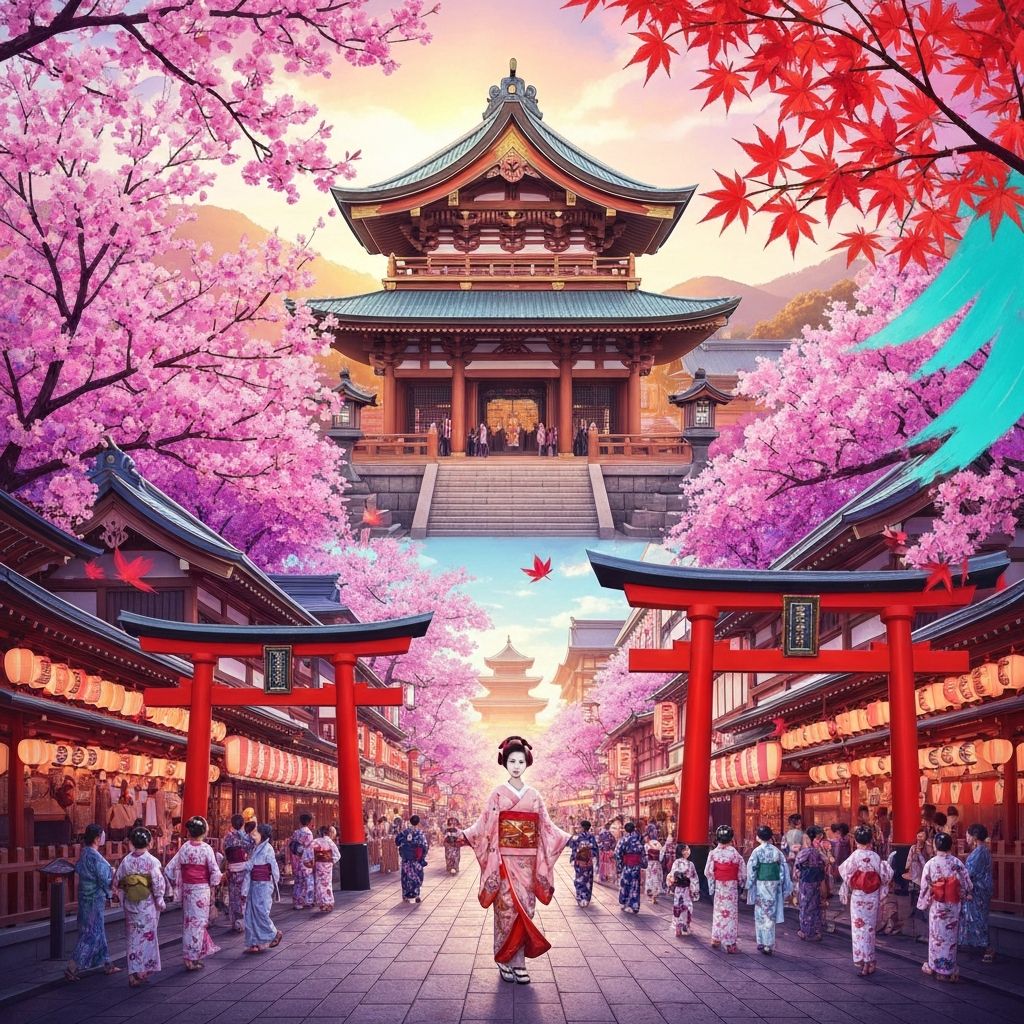
Filosofi & Nilai Budaya Jepang
Budaya Jepang dibangun atas beberapa filosofi & nilai fundamental yang mempengaruhi setiap aspek kehidupan:
1. WA (和 - Harmony/Unity):
• Filosofi paling penting dalam budaya Jepang
• Menempatkan group interests di atas individual desires
• Dalam workplace: Keputusan by consensus, bukan individual ambition
• Dalam kehidupan sosial: Avoid conflict, maintain peace
• Impact: Orang Jepang sangat considerate, tidak ingin mengganggu (じゃまにならないように - jama ni naranai you ni)
2. GIRI (義理 - Duty/Obligation):
• Strong sense of responsibility & obligation
• Giri to employer, family, society
• Fulfill promises & commitments no matter what
• Work overtime jika diperlukan (though changing with younger generation)
• Attend company events even if tired
3. HONOUR (名誉 - Meiyo):
• Protecting personal & family honor sangat penting
• Shame (恥 - Haji) adalah social motivator yang kuat
• Failure publicly dapat deeply affect person
• Why apology & humility penting dalam culture
4. RESPECT FOR HIERARCHY (敬意 - Keiyi):
• Age, position, expertise respected automatically
• Language changes based on hierarchy (casual vs formal Japanese)
• Must address seniors properly
• Hierarchy decision-making (top-down often)
5. AESTHETICS & SIMPLICITY (美学 - Bigaku):
• Appreciation untuk minimal, subtle beauty
• Concept "Ma" (間): Empty space yang meaningful
• Cherry blossom valued not despite short life, because of it
• Garden design, tea ceremony reflect this principle
• Architecture often simple, not ornate
6. RESPECT UNTUK NATURE (自然 - Shizen):
• Shinto belief system sees divine dalam natural phenomena
• Seasonal changes deeply appreciated
• Recycling & environmentalism integral
• Gardens & parks treated with reverence
• Many festivals celebrate seasonal changes
7. ATTENTION TO DETAIL (職人精神 - Shokunin Seishin):
• Craftsman spirit: Excellence dalam setiap detail
• Why Japanese products known untuk quality
• Continuous improvement (Kaizen - 改善)
• Even small tasks done meticulously
• This reflected dalam presentation, packaging, service
8. GROUP HARMONY OVER INDIVIDUALITY:
• "The nail that sticks out gets hammered down" - Japanese proverb
• Fitting dalam group more important than standing out
• Uniform fashion choices in some contexts
• Group decision-making (consensus building)
• Standing up untuk beliefs difficult dalam culture
IMPLICATION UNTUK LIVING IN JAPAN:
• Be considerate of others
• Don't expect immediate individual service (group first)
• Apologize even if not your fault (maintain harmony)
• Follow rules strictly (respect untuk order)
• Dress appropriately (consider surroundings)
• Be punctual (respecting others' time)
• Avoid loud behavior (harmony with environment)
• Learn Japanese (effort respected)
• Participate dalam group activities
• Accept feedback gracefully
Spring (春 - Haru): Cherry Blossom & Renewal Season
PERIODE & CUACA:
• Duration: March - May
• Temperature: 10-20°C (50-68°F)
• Characteristics: Mild, increasingly warm, sometimes rainy
CHARACTERISTIC WEATHER:
• March: Still cool, many rainy days (Tsuyu season starting late)
• April: Perfect weather, sunny & mild
• May: Warmer, occasional rain showers
• UV index: Increasing, sunscreen recommended
• Humidity: Rising toward end of spring
CLOTHING RECOMMENDATION:
• Layers essential (morning cold, afternoon warm)
• Light jacket atau cardigan untuk outdoor
• Comfortable walking shoes (many spring activities outdoor)
• Umbrella (Tsuyu early season)
• Avoid heavy winter clothes
SAKURA (CHERRY BLOSSOM 桜):
1. CULTURAL SIGNIFICANCE:
• Sakura most iconic symbol ng Japanese culture
• Represents:
- Renewal & new beginnings (new fiscal year, school year)
- Transience of life (beauty that lasts 1-2 weeks)
- Spring & hope
• Viewing (Hanami - 花見) ancient tradition, dating back 1000+ years
• Entire country follows "Sakura front" (sakura zensen) from south to north
2. SAKURA SEASON DATES 2026:
• Okinawa: Late January - Early February (already passed by March)
• Tokyo: Late March - Early April (peak ~March 28-April 2)
• Kyoto: Early April (peak ~April 5-10)
• Hokkaido: Late April - Early May (peak ~May 1-5)
• Media announces expected peak weekly (similar to weather forecast)
3. SAKURA VIEWING (HANAMI) ETIQUETTE:
• Timing: Go early morning untuk best crowd (7-9 AM)
• Bring: Picnic supplies, blanket, friends
• Bring: Alcohol (beer, sake) acceptable at night viewings
• Evening viewing (yozakura): Popular, lanterns light trees
• Peak times: Extremely crowded (thousands in popular parks)
• Duration: Usually 1-2 hours in good weather season
• Garbage: MUST take home (no trash cans in parks)
4. TOP SAKURA SPOTS 2026:
• Tokyo: Ueno Park, Chidoriguchi, Meguro River
• Kyoto: Philosopher's Path, Maruyama Park, Arashiyama
• Osaka: Osaka Castle park, Kema Sakuranomiya Park
• Hiroshima: Hiroshima Castle
• Nara: Nara Park (sakura + deer)
• Yoshino: Most famous, but extremely crowded
SPRING FESTIVALS (春祭り):
1. HINA MATSURI (Doll Festival - 3 March):
• Celebrates girls (hinamatsuri)
• Displays of decorative dolls (hina-ningyou)
• Family gathers untuk see displays
• Eat special foods: hina-arare (sweet crackers), shirozake (sweet sake)
• Schools & cities have public displays
2. SHOWA DAY (昭和の日 - 29 April):
• National holiday celebrating Emperor Showa's birthday
• Many people take long weekend (GW - Golden Week)
• Parks packed, many festivals
• Travel crowded, prices up
3. CHILDREN'S DAY (こどもの日 - 5 May):
• Originally Boys' Day, now celebrates all children
• Families display samurai warrior dolls (kabuto)
• Koinobori (carp-shaped wind socks) fly di rumah
• Special foods: Kashiwa mochi (rice cake dalam oak leaf)
• Holidays dari school
4. LOCAL SPRING FESTIVALS:
• Takayama Matsuri (Mid-April, Takayama)
• Hollyhock Matsuri (Mid-May, Kyoto)
• Various shrine festivals (Yatai parade throughout Japan)
SPRING ACTIVITIES:
• Sakura viewing (hanami) - Must-do
• Hiking (山登り - Yamanobo) in mountains with blooming flowers
• Photography of sakura (very popular Instagram time)
• Outdoor dining (yami eats)
• Visiting gardens (gardening at peak beauty)
• Shrine visits untuk blessings
• Spring sports festivals in schools/universities
• Outdoor concerts & picnics
FOOD & FLAVORS:
• Sakura-flavored everything: tea, desserts, drinks ("sakura latte" at cafes)
• Bamboo shoot (Takenoko) dishes
• Young vegetables (asparagus, peas)
• Seasonal fish: Shiira (Spanish mackerel)
• Mochi with sakura leaves (sakura mochi)
• Dango (sweet dumpling) on sticks
• Cherry blossom wine (sakura wine) limited edition
WHAT TO EXPECT LIVING IN JAPAN DURING SPRING:
• Sense of renewal & optimism permeates society
• Business year starts (new employees, new school year)
• Entire country seems to pause untuk sakura
• After sakura ends, slight depression (transience theme)
• Perfect weather untuk outdoor activities
• Great time untuk make friends (hanami parties)
• Photography opportunities abundant
Summer (夏 - Natsu): Heat & Matsuri Festivals
PERIODE & CUACA:
• Duration: June - August
• Temperature: 20-35°C (68-95°F), humidity 60-80%
• Characteristics: Hot, humid, rainy, typhoon risk
CHARACTERISTIC WEATHER:
• June (Early rainy season - Tsuyu):
- Rainy, humid, temperature rising
- Peak: Mid-June till mid-July
- Expect 1-2 rainy days weekly
• July (Mid-summer heat):
- Very hot & humid (feels like 40°C+ with humidity)
- Occasional typhoon system
- Less rain than June
• August (Peak heat & typhoons):
- Hottest month, ultra-humid
- High typhoon risk
- Unbearable heat in cities (especially Tokyo)
CLOTHING:
• Light, breathable cotton clothing
• Short sleeves, shorts acceptable (not work-place though)
• Umbrella essential (lightweight, folding umbrella ubiquitous)
• Sandals atau slip-ons (easy to remove for temples)
• Hat atau visor untuk sun protection
• Avoid dark colors if possible (absorbs heat)
• Most people wear long sleeves at office (air-con strong)
COPING WITH HEAT:
• Air conditioning very strong in buildings (bring jacket)
• Many outdoor spaces shaded (convenience stores, parks have rest areas)
• Vending machines everywhere (can-coffee, water, sports drinks)
• Public fountains untuk cooling off
• Many visit beaches, rivers, swimming pools
• Some public pools (community centers) very cheap (¥500-800)
• Beach season: July - late August (though water still cool early July)
SUMMER FESTIVALS (MATSURI 祭り):
Matsuri adalah BIGGEST PART OF SUMMER CULTURE - Nearly every neighborhood has one!
1. MAJOR SUMMER MATSURI:
• Gion Matsuri (京都 - Kyoto):
- Dates: July 1-31 (main events July 14-17)
- Duration: Month-long festival, very crowded
- Features: Massive float parade (yamahoko jungyō), food stalls
- Experience: 1 million+ visitors, traditional costumes
- Must-go jika di Kyoto
• Takayama Matsuri (高山 - Takayama, Gifu):
- Dates: April 14-15 (spring), September 9-10 (fall)
- Features: Beautiful old-town atmosphere, elaborate floats
- Less crowded than Gion
- Must-see jika interested dalam traditional Japan
• Sumida River Fireworks (隅田川 - Tokyo):
- Date: Last Saturday of July (usually July 25-30ish)
- 20,000+ fireworks, viewed dari river banks
- Arrive early (3-4 hours before) untuk good spot
- Watching dari boat (river cruise) most comfortable
- Yukata-wearing crowd creates magical atmosphere
• Miyako Odori (京都):
- Dates: April & October (not summer technically, but spring)
- Traditional geisha dance performance
- Highly recommended cultural experience
2. TYPICAL MATSURI ELEMENTS:
• Mikoshi (神輿): Portable shrine carried through streets
- Loud chanting: "Wasshoi! Wasshoi!"
- Many people participate carrying
- Very energetic, sweaty event
• Yatai (屋台): Food stalls
- Takoyaki (octopus ball)
- Okonomiyaki (savory pancake)
- Yakitori (grilled chicken skewers)
- Shaved ice (kakigori)
- Taiyaki (fish-shaped cake)
- Cotton candy (wata ame)
- Beer & alcoholic drinks
• Games & activities:
- Goldfish scooping
- Dart throwing
- Ring toss
- Target shooting
• Fireworks (hanabi) - often finale
• Live music & performances
3. FAMOUS MATSURI THROUGHOUT SUMMER:
• June-July: Various shrine matsuri
• July: Gion (Kyoto), Sumida (Tokyo), various local festivals
• August:
- Obon (お盆): Family gathering time (August 13-15)
- Awa Odori (徳島): Dance festival dengan thousands participating
- Sendai Tanabata (仙台): Star festival with large lantern displays
- Aomori Neputa (青森): Giant lantern parade
OBON HOLIDAY (盆 - Buddhist Memorial Holiday):
• Dates: August 13-15 (officially, though some regions may 13-16)
• Purpose: Honor deceased ancestors, family reunions
• Significance: Similar importance to New Year
• What happens:
- Family gatherings & temple visits
- Special foods prepared (dango, etc.)
- Return to hometown (causes traffic congestion)
- Some businesses closed
- Lanterns floated down rivers (Obon dance)
• Obon festival: Ecstatic festival dancing (Odori)
• Many companies give 3-5 day holidays
SUMMER ACTIVITIES:
• Beach trips (sea water safe to swim mid-July onwards)
• Mountain hiking (despite heat)
• Festival going (matsuri-hopping)
• Fireworks viewing
• Visiting relatives (Obon)
• Summer vacation travel (expensive & crowded, August 1-15)
• Indoor shopping/entertainment (too hot outside)
• Swimming pools & water parks
• Bowling centers
• Karaoke (air-con inside)
SUMMER FOOD:
• Cold noodles: Hiyamen (冷やし麺), Zaru soba (ざるそば)
• Kakigori (shaved ice) dengan variety of flavors
• Unagi (eel) - gives stamina in summer heat
• Watermelon (スイカ - suika) - refreshing
• Cold ramen (ramen cold version)
• Ramune (弾むラムネ): Marble soda drink
• Beer (ビール) sales peak in summer
• Frozen desserts: Ice cream, popsicles
CHALLENGES OF SUMMER:
• Extreme humidity makes AC clothes different from outside
• Typhoons can be dangerous & disruptive
• Summer vacation crowds (trains packed August 1-15)
• Heat exhaustion risk jika overdo outdoor activities
• Mosquito-borne illness risk (dengue, Japanese encephalitis)
• Mosquito coils (蚊取り線香) necessary in some areas
JAPANESE SUMMER SURVIVAL TIPS:
• Use vending machine coffee (canned, ice cold) - ubiquitous & cheap
• Carry hand towel (most public restrooms no hand dryer)
• Wear yukata (casual summer kimono) untuk festivals
• Stay hydrated constantly
• Sleep in cool places (many go to cinema untuk air con during day)
• Use cooling gel packs untuk sleep
• Participate dalam festival (very rewarding experience)
• Be prepared untuk typhoon (stay home, stock supplies 2-3 days before)
Autumn (秋 - Aki): Leaves & Harvest
PERIODE & CUACA:
• Duration: September - November
• Temperature: 10-25°C (50-77°F)
• Characteristics: Cool, pleasant, beautiful foliage
CHARACTERISTIC WEATHER:
• September:
- Still warm, occasional typhoon
- Humidity decreasing
- Beautiful clear skies late month
• October:
- Ideal temperature, clear skies
- Perfect weather month
- Almost no rain
• November:
- Cool, approaching winter
- Leaves at peak beauty
- Clear, crisp mornings
CLOTHING:
• Light layers (sweater, light jacket)
• Jeans or casual pants comfortable
• Sneakers atau casual shoes good
• By late November, might need heavier jacket
• Umbrella still helpful (though less rain)
• Scarf fashion becomes popular
AUTUMN FOLIAGE (紅葉 - Kouyou):
1. IMPORTANCE OF FALL COLORS:
• Nearly as iconic as sakura, but longer lasting (3-4 weeks vs 1-2 weeks)
• Represents transition, acceptance of change
• Peak viewing season for many tourists
• Entire country follows "autumn colors front" similar to sakura
2. PEAK KOUYOU DATES 2026:
• Hokkaido (northernmost): Late September - Early October
• Tokyo area: Mid-October to early November
• Kyoto: Late October to early November
• Southern areas: November-December
• Each region announces peak dates weekly
3. BEST VIEWING SPOTS:
• Kyoto:
- Arashiyama (bamboo grove + kouyou)
- Philosopher's Path (canal with maples)
- Kinkaku-ji (Golden Pavilion surrounded by colors)
• Tokyo:
- Rikugien (famous kouyou garden)
- Koishikawa Korakuen
- Shinjuku Gyoen
• Other famous spots:
- Nikko (UNESCO site + famous colors)
- Hakone (mountain scenery + lake)
- Mount Fuji (colored leaves + mountain backdrop)
- Various temples throughout country
4. KOUYOU VIEWING ETIQUETTE:
• Time: Can view anytime (unlike sakura, doesn't change daily dramatically)
• Crowds: Still crowded, but less intensive than sakura
• Photography: Very popular (Instagram worthy)
• Temples: Many have night-time illumination (夜間拝観 - yakan haibai)
• Timing: Peak season, many tour groups
AUTUMN FESTIVALS & HOLIDAYS:
1. RESPECT FOR THE AGED DAY (敬老の日):
• Date: 3rd Monday in September (September 21, 2026)
• Public holiday
• Celebrates & honors elderly
• Many seniors receive small gifts
• Special meals atau services offered
2. AUTUMN EQUINOX (秋分の日):
• Date: Around September 22-23 (Sept 22, 2026)
• Public holiday
• Astronomical significance
• Buddhist tradition: Higan (middle path between extremes)
• Many visit gravesites, bring flowers (Higan)
3. CULTURE DAY (文化の日):
• Date: November 3
• Celebrates Japanese culture & arts
• Many museums free admission this day
• Schools & communities have cultural performances
• Music recitals, art exhibitions
4. LABOR THANKSGIVING DAY (勤労感謝の日):
• Date: November 23
• Celebrates labor & production
• Originally agricultural harvest festival
• Long weekend (often combined dengan nearby days)
• Family gatherings common
AUTUMN-SPECIFIC MATSURI:
• Various harvest matsuri (throughout Japan)
• Takayama Matsuri (Takayama, Gifu): October 9-10
• Aoi Matsuri (Kyoto): October 22
• Kurama Fire Festival (Kyoto): October 22
• Local shrine matsuri (yatai, food stalls)
AUTUMN ACTIVITIES:
• Kouyou viewing (momiji-gari - hunting for autumn colors)
• Hiking (mountain scenery spectacular)
• Photography of fall colors
• Temple visiting (peaceful atmosphere)
• Arts & cultural events
• Sports festivals in schools
• Outdoor concerts
• Fruit picking (grapes, persimmons, chestnuts)
• Visiting hot springs (onsen) dengan foliage backdrop
AUTUMN FOOD:
• Chestnuts (栗 - kuri): Used in many dishes, limited edition sweets
• Persimmons (柿 - kaki): Fresh & sweet
• Grapes (葡萄 - budou): Premium varieties expensive
• Mushrooms (きのこ - kinoko):
- Shiitake, enoki, oyster varieties
- Popular dalam soups & stews
• Chestnut rice (栗ご飯 - kuri gohan): Seasonal favorite
• Roasted sweet potato (焼き芋 - yaki imo): Street food
• Chestnuts in cream (栗のモンブラン - mont blanc): Popular autumn dessert
• Horse meat (basashi) - stronger seasonal emphasis
• New rice (新米 - shinmai): First harvest of year
• Sake brewing season (sake-brewing festival in November)
WHAT TO EXPECT DURING AUTUMN:
• Perfect weather most days (Comfortable for outdoors)
• Natural beauty draws people outdoors
• Sense of gratitude & appreciation permeates society
• Harvest theme in foods & festivals
• Schools busy dengan sports days, cultural festivals
• Slightly melancholic mood (as leaves fall, days shorten)
• Peak travel season (prices higher, accommodations booked)
• Great time untuk make outdoor memories
Winter (冬 - Fuyu): Snow & New Year Traditions
PERIODE & CUACA:
• Duration: December - February
• Temperature: 0-15°C (32-59°F)
• Characteristics: Cold, dry, occasional snow (regional)
CHARACTERISTIC WEATHER:
• December:
- Cool, dry weather
- Tokyo rarely gets snow
- Northern regions (Hokkaido, Niigata) get heavy snow
• January (Coldest):
- Below freezing in many areas
- Hokkaido: Heavy snow, -5 to -15°C
- Tokyo: Cold but usually no snow
- Occasional freezing rain
• February:
- Still cold, slightly warming toward spring
- Umeblossom (梅 - ume) starts blooming late month
- Last snow of season often
CLOTHING:
• Heavy winter coat essential (though dry cold, wind chills)
• Scarf, hat, gloves standard
• Thermal underwear recommended
• Warm socks
• Waterproof boots jika in snowy region
• Most buildings heated well, so layering important
• Indoor AC often full blast (carry cardigan for indoors)
WINTER ACTIVITIES:
SKI & SNOW SPORTS (Northern Japan):
• Hokkaido premier ski destination (powder snow)
• Niseko: Most famous ski resort (International standard)
• Other resorts: Rusutsu, Furano, Tomamu
• Ski season: December - March (peak January-February)
• Accommodation booked far in advance
• Japanese skiers enthusiastic, affordable compared to Alps
• Beginner slopes available
• After-ski culture strong (hot springs, restaurants)
WINTER ILLUMINATIONS (Lightsup 光の祭典):
• November-February, cities decorated
• Christmas (December): Not religious holiday, commercial holiday
- Shopping streets covered dengan lights
- Malls offer special promotions
- KFC fried chicken traditional Christmas food (marketing genius)
- Couple date activity (unlike Western Christmas)
- Small Christmas cakes popular desserts
• Especially beautiful:
- Tokyo Midtown
- Roppongi Hills
- Marunouchi illumination
- Osaka Christmas markets
NEW YEAR (正月 - Shogangetsu): BIGGEST HOLIDAY OF YEAR
1. NEW YEAR CELEBRATION (New Year's Eve & 1st):
• December 31 - January 3: Official holiday period
• Most businesses closed
• Family gathering time
• Similar to Christmas/Thanksgiving combined in Western culture
2. PREPARATIONS & TRADITIONS:
• House cleaning (大掃除 - oosouji): Cleaning away old year's negative energy
• Mochi making (もち作り): Families make rice cakes together
• Special foods prepared:
- Osechi (御節): Elaborate multi-box meal with symbolic foods
- Mochi (rice cake)
- Ozoni (soup with mochi)
• Kadomatsu (門松): Pine decorations placed at gate
• New Year cards: People send thousands of postcards (greeting cards)
3. NEW YEAR'S DAY CUSTOMS:
• Hatsuhinode (初日の出): Watching first sunrise of year
- Popular spots crowded with thousands
- Beaches, mountains, temples all good viewing spots
- Tokyo: Mount Takao, Roppongi Hills
• Shrine visit (参詣 - sanpei): Praying for year ahead
- "First shrine visit" (初詣 - hatsumoude)
- Meiji Shrine: 2-3 million visitors during New Year
- Can take 1-2 hours in line
- Receive omamori (lucky charm) & ema (wish plaque)
• Family meals together
• Relaxation at home
4. NEW YEAR CELEBRATIONS (Around January 1-5):
• New Year markets (popcorn, toys, food)
• Coming of Age ceremony (成人式 - Seijin Shiki) - January 2nd Monday
- Celebrates people turning 20 (traditionally, now 18 since 2022)
- Young women wear elaborate furisode (long-sleeved kimono)
- Young men wear formal suits or samurai armor
- Photos & celebration with friends
• New Year games:
- Karuta (card game)
- Takoyaki games
- Menko (card game)
• TV specials & entertainment
JAPAN'S THANKSGIVING SEASON (Thanksgiving esque):
• New Year embodies grateful reflection
• Paying off debts, clearing conflicts before new year
• Concept of "turning over a new leaf"
• Resolution making (similar to Western New Year)
WINTER FESTIVALS:
• Various local winter matsuri throughout Japan
• Light festivals & Christmas-ish events (commercial)
• Plum blossom viewing starts late February
• Ice sculpture festivals (Hokkaido)
WINTER FOODS:
• Nabe (hot pot): Group dining with broth & vegetables/meat
- Sukiyaki (beef & vegetables in sweet broth)
- Shabu-shabu (thinly sliced meat & vegetables)
- Yosenabe (seafood & vegetables)
- Perfect warming meal
• Oden (おでん): Simmered side dishes
- Sold at convenience stores
- Daikon, eggs, fishcakes, tofu
- Warming & comforting
• Udon: Hot noodle soup (Kake udon popular)
• Takoyaki & okonomiyaki (warming foods)
• Mikan (mandarin orange): Winter fruit
• Hot sake (hot rice wine)
• Hot tea & coffee (vending machines sell warm drinks)
• New Year special: Ozoni (mochi soup)
• Kenchin-jiru (vegetable soup): Warming
• Dorayaki (bean paste pancake): Winter comfort food
CHALLENGES OF WINTER:
• Dry skin & lips (low humidity)
• Lack of sunlight (affects mood some people)
• Dry cough common
• Cold can be intense depending on region
• Travel during New Year expensive & crowded
• Typhoon season ends, but occasional winter storms
• Heating bills can get expensive
• Ice on roads (Hokkaido, mountainous areas)
JAPANESE WINTER BEAUTY & PHILOSOPHY:
• Wabi-sabi: Embracing impermanence & imperfection
• Winter represents transition, contemplation
• Fewer outdoor activities but deeper indoor appreciation
• New Year symbolizes rebirth & fresh start
• Winter solitude valued in culture
WHAT TO EXPECT:
• Entire country celebrates New Year intensely
• Business resumes around January 5
• Schools resume around January 8
• Weather can be harsh in northern regions
• Beautiful winter scenery in snowy areas
• Festive atmosphere during holidays
• Perfect time untuk visit hot springs (onsen paradox: hot spring dalam cold weather)
• Cooking together (nabe parties) brings people closer
• Melancholic beauty of winter landscape